Parent-Led Curriculum
Early Elementary History
Company: Knowable World
Audience: Homeschooling families with children ages 4-8 (grades K-2)
Format: Digital (Thinkific LMS with video, quizzes, and teaching guides), plus printable activities
Technologies: Thinkific LMS, Canva, Google Earth, Google Sheets, Google Docs

Project
Overview
History Detectives is a social studies and history curriculum designed to give young homeschoolers a meaningful foundation for later history studies without relying on memorization or rote learning. I partnered with historian and veteran homeschool teacher Scott Powell to create a three-year early elementary curriculum that introduces history as "the revelation and explanation of the world we live in." We completed the first year of the program (35 weekly lessons) before pausing to prioritize other projects.
I led the design and development of all printable and parent-facing lesson elements, built the LMS course, and helped shape the format of the entire series. The goal was to make history open-ended, engaging, and accessible to young students and their families.
- Curriculum & Instructional Designer: Developed the structure and format of the early elementary program, including pacing, activity format, and parent experience.
- Resource Developer: Designed more than 35 printable activity sets, vocabulary journal pages, lesson guides, reading lists, and extension materials.
- Collaborative Planner: Worked closely with the subject matter expert to structure the lesson sequence, edit video scripts, and align activities to lesson objectives.
- LMS Manager: Built and updated the Thinkific course, segmented lessons into shorter video-and-quiz chunks based on parent feedback, and managed communication with beta testers.
- Project Manager: Maintained the production timeline, led weekly planning meetings, and coordinated user testing and feedback implementation.
The History Detectives program is based on the "present-centric" approach of historian Scott Powell, which treats history not as a disconnected discussion of past events but as the explanation of how the world came to be the way it is. This approach is particularly powerful for young children, whose natural curiosity about their surroundings becomes the launch point for learning.
My design goal was to help children begin to see history everywhere—by asking questions about the world around them and then tracing those facts back to their causes. For example, we explored topics like electricity, clothing, and transportation under the theme of "Then and Now," helping students connect familiar experiences to larger historical changes.
To support this approach, I created hands-on, flexible activities that rewarded student curiosity and made room for open-ended discovery. Activities were developmentally appropriate for ages 4-6, and suitable for pre-readers and beginning readers. At the same time, I ensured that all parent materials were truly "open and go," requiring little to no prep time.
Accessibility and adaptability were key. Lessons could be used with a range of ages and learning styles. Writing was always optional, videos were short and captioned, and families could go deeper with extension ideas or keep things simple with the core activity.
Scott and I co-developed the overall structure for a three-year K-2 history program, broken into seven themed units per year. Each unit included five weekly lessons with accompanying activities. For the first year, we completed 35 fully developed lessons, each centered around a short video lecture.
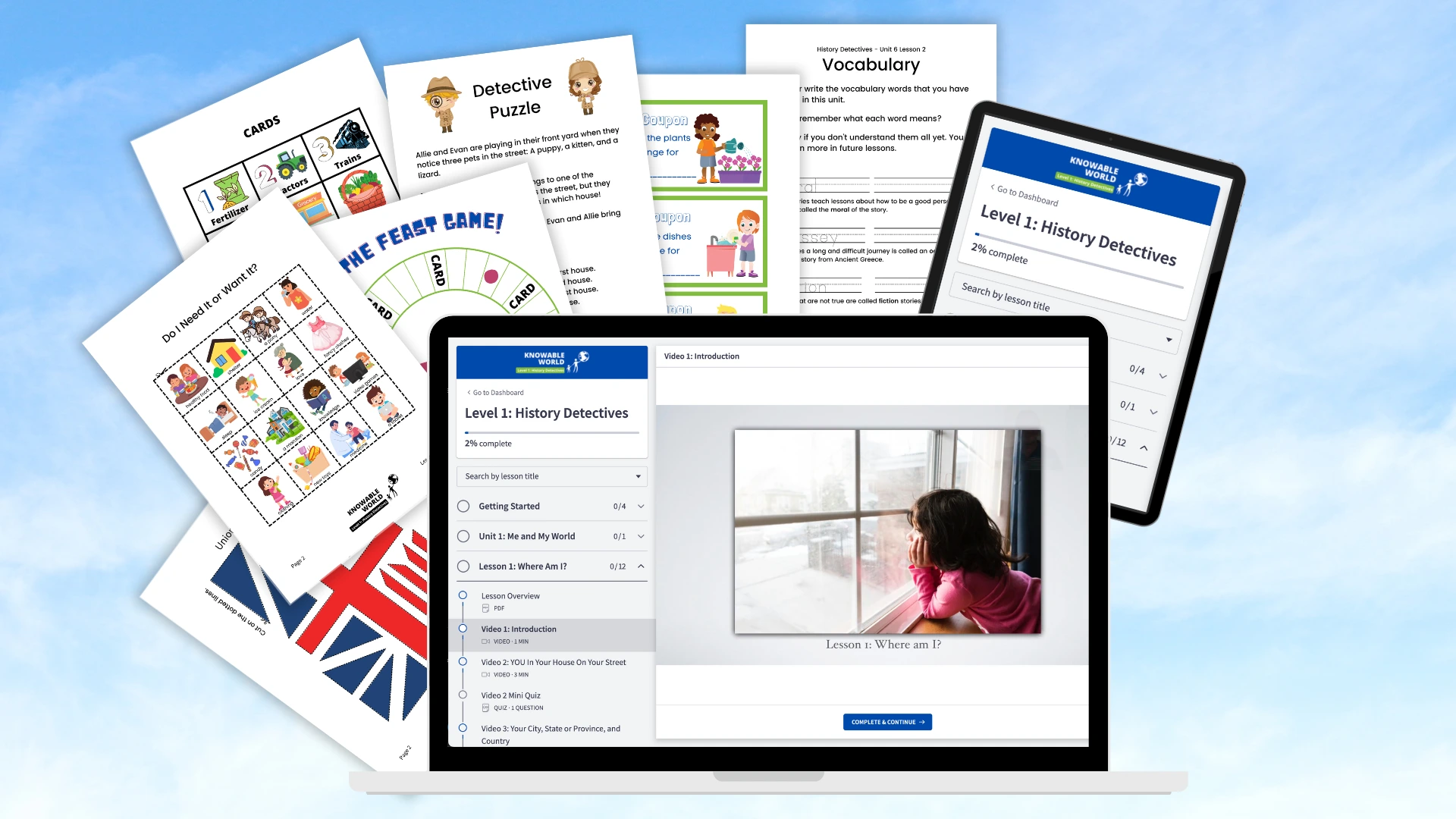
Scott wrote and recorded the video content, while I edited the scripts and created all supporting materials: printable main activities (e.g., maps, games, interviews, hands-on challenges), vocabulary journal pages with optional tracing or copywork, extension ideas for parents, reading recommendations, parent lesson guides with objectives and teaching tips, and embedded quizzes between video segments to reinforce understanding.
I also built and maintained the Thinkific LMS course, including all visual layout, resource organization, and user experience improvements. One major improvement came from early parent feedback: instead of one longer video per lesson, we restructured the content into shorter video clips with brief quizzes in between.
To ensure quality and usability, I ran a beta group of homeschool families who used the lessons as they were released and provided feedback. Their input directly informed format revisions and helped validate the program's usability in real homeschooling environments.
Activity Samples
The activities I designed for History Detectives are hands-on, age-appropriate, and designed to spark conversation between parent and child. Click any sample to download the PDF.
A simple, replayable board game that reinforces lesson concepts and builds vocabulary through play
Students imagine the future and reflect on the present by designing a time capsule of daily life
A visual, cut-and-paste activity to introduce children to different types of flags and what they represent
A digital field trip using Google Earth to explore classical architecture around the world
A movement-based activity where students measure out a mile from home and start thinking in map scale
Results
Outcomes
History Detectives: Level 1 was used by over 200 families through our website. I also piloted the curriculum with a group of local homeschoolers, which gave me direct insight into how children of different ages and ability levels engaged with the material. The feedback from parents was positive—many appreciated how easy the lessons were to teach, how flexible the activities were, and how the present-centric perspective helped their children connect to history at such a young age.
One major format revision (segmenting the videos and embedding discussion-based quizzes) came directly from early user feedback and made the program more adaptable to families' varied routines.
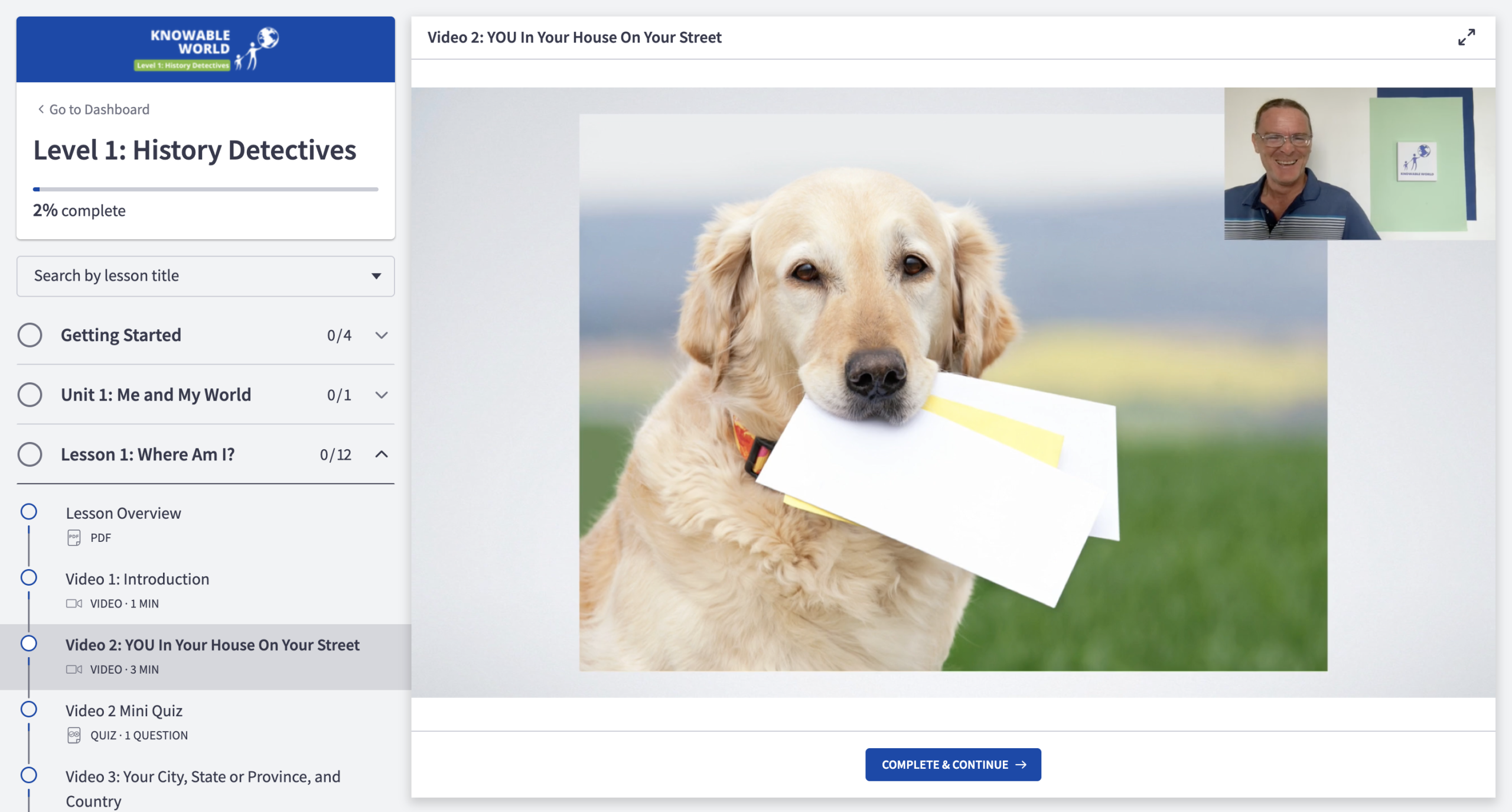
Although we paused development of the full three-year sequence due to production costs, the same overall format and design principles were used later in our Anchor Facts program for older students (grades 3-7), demonstrating the durability and transferability of the core instructional design.
Feedback
Comments from Parents
"The activity was great as it gave hands-on experience to reinforce the lesson."
Melissa
"Great lesson — I'm excited to continue!"
Naomi
"My kids LOVED the cut and paste activity from this lesson... having that option was perfect for them."
Parent of kindergarteners
"The address activity was great. The vocabulary words were right on target."
Megan
"We really enjoyed this lesson. It sparked a great discussion about how the US 'started' on the east coast and moved west. I love how engaged my 7-year-old is in these lessons!"
Katie
Looking Back
Reflections
I'm proud to say that I created a resource I would have been thrilled to use with my own children.
This project confirmed for me how much I enjoy designing conceptual, open-ended learning experiences — especially for homeschool families. I loved building a program that could be used flexibly, required little prep from parents, and sparked meaningful conversations with kids about the world around them.
I also learned a lot about working with subject matter experts. One key lesson was that it's important to establish clear roles and expectations early, especially around audience needs and content level. In hindsight, I would have prototyped a smaller product (a unit or mini-course) and tested it more thoroughly before building out the full year.
Still, I'm proud to say that I created a resource I would have been thrilled to use with my own children. This curriculum gives families a meaningful and engaging way to begin the study of history — one that connects to a child's real experience and sets the stage for deeper learning in later years.
Conclusion
Summary
This project demonstrates my ability to translate expert content into flexible, age-appropriate learning experiences for homeschool families. I can design full curricular sequences, manage platform builds, and create visually polished printable resources that are simple to use and pedagogically sound. Whether working with early learners or older students, I bring an understanding of both the homeschooling context and sound instructional design. If you're looking for someone who can bridge subject-matter expertise with engaging, age-appropriate design—especially for homeschool or independent learners—I'd love to help bring your next project to life.
 See more projects from my portfolio